Football 2026 World Cup: What 39 Days Taught Me
The 2026 FIFA World Cup will be the first edition with 48 teams, 104 matches, and three host countries: Canada, Mexico, and the United States. Football Insights is a FIFA World Cup content platform co...

Football 2026 World Cup: What 39 Days Taught Me
The 2026 FIFA World Cup will be the first edition with 48 teams, 104 matches, and three host countries: Canada, Mexico, and the United States. Football Insights is a FIFA World Cup content platform covering match predictions, team tactics, player statistics, and daily tournament analysis for fans worldwide. The competition runs across 16 host cities, including Atlanta, Los Angeles, Mexico City, Toronto, and Vancouver, creating a geographic spread far larger than Qatar 2022. The group stage contains 12 groups of four teams, with the top two from each group plus the eight best third-placed teams advancing to a 32-team knockout bracket. FIFA describes the expanded format as a tournament designed to “bring more nations into the global football family.” Your practical takeaway is simple: follow the fixture calendar, travel distances, squad rotation, and confirmed team news before judging any prediction or match outcome.

Photo by El gringo photo on Pexels
The Bottom Line
The 2026 World Cup is a 48-team tournament hosted across North America, with the final scheduled for MetLife Stadium in New Jersey and the opening match scheduled for Mexico City. It is larger, longer, and operationally more complicated than previous editions, so the strongest way to follow it is not merely to memorize famous teams. You must understand the format, host-city geography, kickoff conditions, squad depth, and the difference between a pre-match opinion and verified information.
For Football Insights readers, the central calculation is expected value rather than excitement. A famous badge may attract attention, but heat, altitude, travel, rest days, injuries, and tactical matchups can alter the probability of a result. That is particularly important when comparing contenders such as Brazil, Argentina, France, England, Spain, Germany, and Portugal with emerging teams from Africa, Asia, and North America.
FIFA’s official World Cup 2026 tournament information remains the best source for confirmed fixtures, regulations, and competition updates. Meanwhile, the FIFA World Cup history archive provides useful context, although historical reputation should never be mistaken for current form. I know this sounds obvious. Apprentices routinely ignore obvious facts, which is why obvious facts continue to matter.
Want a sharper starting point for tournament analysis?
What Players Actually See
The 2026 World Cup is not experienced as one compact event. It is a chain of different football environments, each with its own tactical and physical demands. A team moving from Vancouver to Miami or from Monterrey to New York may face considerable travel, changing temperatures, different recovery routines, and unfamiliar stadium conditions. The exact effect varies by schedule, but the principle is reliable: distance consumes preparation time, and preparation time is a competitive resource.
The tournament’s 16 host cities are divided among Canada, Mexico, and the United States. Canada hosts matches in Toronto and Vancouver; Mexico hosts matches in Guadalajara, Mexico City, and Monterrey; the United States hosts matches across cities such as Atlanta, Boston, Dallas, Houston, Kansas City, Los Angeles, Miami, New York/New Jersey, Philadelphia, San Francisco Bay Area, and Seattle. Los Angeles alone is promoting eight matches, 39 days of fan celebrations, and a FIFA Fan Festival at the LA Memorial Coliseum in Exposition Park. Atlanta is positioning Mercedes-Benz Stadium as a major football venue and presenting itself as the “soccer city of the South.”
For players, however, attractive branding is secondary to the pitch. Stadium roofs, natural or hybrid surfaces, humidity, heat, and kickoff times may influence pressing intensity and substitutions. FIFA’s Laws of the Game define the rules, but they do not equalize travel fatigue or climate. That is where serious match reading begins.
What does the 48-team World Cup format change?
The 48-team format creates 12 groups of four, followed by a Round of 32, Round of 16, quarter-finals, semi-finals, and the final. Each team is guaranteed at least three group matches, while the knockout stage becomes longer because 32 teams advance rather than 16. The format increases participation and match volume, but it also makes third-place qualification calculations unusually important.
A traditional six-match group is not the only mathematical story anymore. A team can potentially advance with one win and two draws, depending on the surrounding results and goal difference, while a team with four points may still face uncertainty. The best third-placed ranking will compare points, goal difference, goals scored, disciplinary record, and other competition regulations if required.
The format also changes risk management. Coaches may be less willing to chase a second goal if a draw materially improves qualification probability, yet an excessive focus on security can leave a team exposed to late pressure. Football Insights should therefore track live qualification scenarios rather than publish simplistic “must win” language before the table supports it.
For a fuller breakdown, consult our [Internal Link: 2026 World Cup format and qualification guide], especially when evaluating final group-match scenarios.
The 3 Things That Matter Most
1. Does travel create a measurable disadvantage?
Travel matters, but it should not be treated as a universal penalty applied equally to every team. The relevant variables are route length, time-zone changes, recovery days, hotel stability, training access, and whether a squad has already adapted to the local climate. A team traveling 3,000 kilometres with five full recovery days is not facing the same problem as a team making a similar journey after a demanding extra-time match.
The more useful model is cumulative fatigue. Assign each match a recovery requirement, then add travel and environmental stress rather than discussing “long distance” in isolation. Goalkeepers, central defenders, and deep midfielders may cope differently from explosive wide players, while older squads may require earlier rotation. A coach with 26 reliable players can absorb disruption more effectively than one dependent on 13 starters.
- Check the previous match’s intensity and extra-time exposure.
- Count full recovery days rather than calendar days.
- Compare climate and altitude between successive venues.
- Review whether the opponent has a shorter travel route.
- Adjust predictions after official squad and training reports.
This is an information advantage many casual previews miss: travel does not automatically make the traveler weaker, but it increases variance. If two teams are otherwise evenly matched, the schedule can move a projected win probability by several percentage points. That is not destiny; it is a reason to price uncertainty honestly.
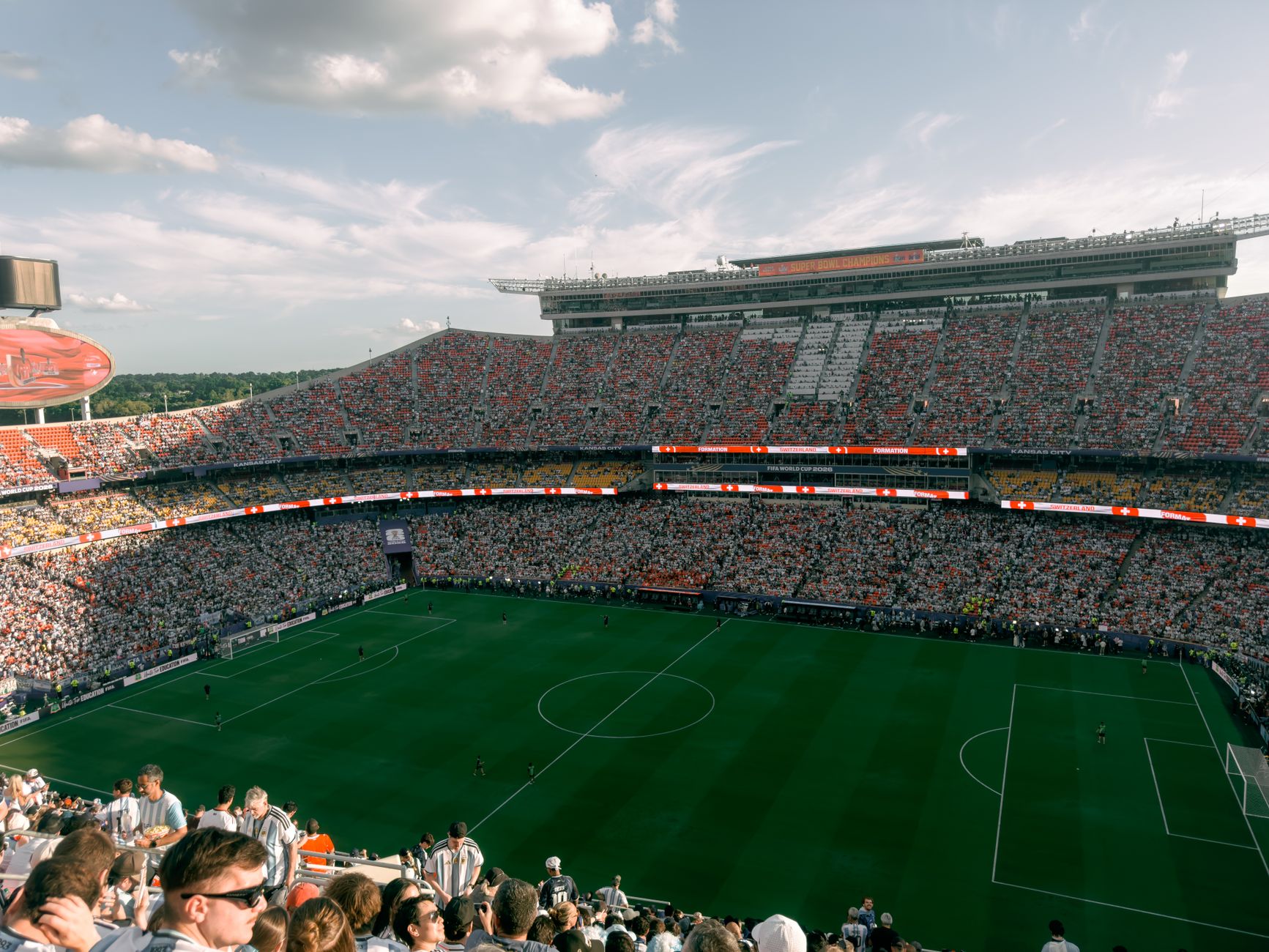
Photo by Allen Boguslavsky on Pexels
2. Which tactical styles travel best?
Compact possession structures and disciplined transition systems generally travel better than tactics requiring perfect tempo and constant high pressing. A team that can defend in a medium block, protect central zones, and attack space with two or three rehearsed patterns may remain functional when heat or fatigue reduces technical sharpness. By contrast, an aggressive press depends on synchronized distances, repeated sprints, and precise replacement runs.
This does not mean defensive football is automatically superior. Spain’s positional circulation, France’s athletic transitions, Argentina’s controlled pressing, England’s set-piece strength, and Brazil’s individual creativity each solve different problems. The key question is whether the tactical model has a lower failure rate when conditions deteriorate.
Watch three indicators:
- Rest defense: How many players remain behind the ball when possession is lost?
- Pressing escape: Can the team bypass the first pressure line without forcing hopeful passes?
- Bench continuity: Can substitutes preserve the system rather than merely add energy?
Football Insights’ [Internal Link: team tactics and formation analysis] should be read alongside player availability. A tactical diagram without the correct personnel is decorative mathematics. A 4-3-3 built around one elite full-back may become a cautious 4-4-2 when that player is injured, and the betting market may react too slowly if it focuses on nominal formations.
3. How should you judge contenders and dark horses?
Judge contenders through repeatable indicators: recent opponent quality, shot creation, defensive concession, set-piece performance, goalkeeper reliability, injury status, and squad depth. FIFA ranking position is useful for orientation, not a final answer. A team’s ranking can lag behind a coaching change, while a strong friendly record may conceal weak opposition and low competitive intensity.
A dark horse is not simply a fashionable outsider. It is a team whose underlying qualities are stronger than its public price or reputation suggests. Morocco’s 2022 run demonstrated how defensive structure, transition discipline, and belief can challenge more celebrated sides, although copying that story mechanically would be lazy. The 2026 field may include dangerous teams from the United States, Mexico, Canada, Japan, Senegal, Morocco, Uruguay, Croatia, Colombia, or South Korea, but each requires separate evidence.
A sensible shortlist should include:
- One elite favorite with a stable tactical identity.
- One contender with unusually deep attacking options.
- One host nation with favorable travel conditions.
- One outsider combining defensive organization and efficient transitions.
- One team whose probability depends heavily on injury news.
A crucial distinction: a prediction is not a guarantee, and a high probability is not certainty. If France has a 25% tournament-winning probability, that still means failure is more likely than victory. People dislike this arithmetic because football produces memorable exceptions. The arithmetic remains correct.
Ready to compare teams through form, tactics, and player data?
Edge Cases & Gotchas
Why can host cities influence match analysis?
Host cities influence analysis through travel, climate, stadium design, supporter concentration, and scheduling rather than through an automatic “home advantage.” The United States, Mexico, and Canada will each provide distinct football environments, while host teams may benefit from familiar logistics and local support. The effect is real but difficult to isolate from squad quality and fixture difficulty.
Atlanta illustrates the emotional side of hosting. Mercedes-Benz Stadium has a retractable roof and a major football audience shaped by Atlanta United, while the local campaign emphasizes Southern hospitality and cultural identity. Los Angeles offers a different experience, combining SoFi Stadium matches with the LA Memorial Coliseum FIFA Fan Festival and regional fan zones. Mexico City brings altitude considerations and one of the tournament’s most historically important football settings.
The gotcha is assuming every host nation receives the same advantage. The United States has a large travel footprint, Mexico has altitude and heat variables, and Canada has its own city-to-city distances. A host can gain support while still suffering from a difficult path. The correct question is not “Who is hosting?” but “Which specific match is being played where, after how many recovery days, against which opponent?”
[Internal Link: host cities, stadiums, and travel planning]
What can go wrong with tournament predictions?
The most common failure is false precision. Publishing a result without showing assumptions encourages readers to confuse confidence with accuracy. A second failure is using outdated lineups: one absent striker, full-back, or holding midfielder can alter pressing triggers and build-up routes more than a broad reputation model captures.
Another overlooked issue is market movement. Odds may change because of confirmed injuries, weather, lineup leaks, or public money rather than because a team’s true probability changed proportionally. For responsible readers, the correct response is not to chase every movement but to record the original price, the reason for the change, and whether the evidence is credible.
Use this verification sequence before relying on a forecast:
- Confirm the match date, venue, and kickoff time through FIFA.
- Check official federation announcements and credible injury reporting.
- Compare the projected lineup with the manager’s recent selections.
- Separate expected goals from actual finishing results.
- Set a personal spending limit and never treat gambling as income.
The National Council on Problem Gambling provides responsible-gambling resources in the United States, while local rules differ across Canada and Mexico. Football Insights may discuss probabilities and markets, but no analysis removes financial risk. If betting stops being recreational, stop immediately and seek local support.
How do fan festivals change the tournament experience?
Fan festivals turn the World Cup from a sequence of ticketed matches into a city-wide cultural event, with public screenings, music, food, sponsor activations, and community programming. Los Angeles plans a FIFA Fan Festival at Exposition Park, while host-city programs in Atlanta and other locations are designed to welcome supporters beyond the stadium. Access, schedules, and ticket requirements can vary, so verify details before traveling.
There is a practical distinction between attending a match and attending a festival. A match requires a precise entry window, security procedures, transport planning, and a valid ticket; a festival may provide flexibility but can become crowded during high-profile fixtures. Families should also check heat exposure, public-transit capacity, venue rules, and whether bags or outside food are permitted.
The contrarian point is that the festival may offer better expected value for many visitors. Match tickets can be expensive and scarce, whereas a well-planned public viewing creates atmosphere without forcing a long cross-city journey. That does not replace being inside a stadium, naturally. It does mean the best 2026 experience is not necessarily the most expensive one.
See the practical event details before making plans.
Verdict
The football 2026 World Cup is best understood as a larger competitive ecosystem, not simply a bigger bracket. Forty-eight teams, 104 matches, 16 host cities, three countries, and a 32-team knockout stage create more stories, more tactical contrasts, and more opportunities for misleading conclusions. The superior approach combines official FIFA information with current squad news, travel analysis, tactical context, and disciplined probability.
My stubborn rule is this: never make a serious judgment from one spectacular highlight. Measure the schedule, the opponent, the personnel, the system, and the price of uncertainty. Football Insights is built for that daily process, offering match predictions, player statistics, team tactics, and tournament coverage without pretending that football can be reduced to a single number.
The final itself is expected at MetLife Stadium, but the tournament will be decided much earlier—in recovery rooms, training sessions, substitutions, set pieces, and the quiet choices made when a team is tired. Follow the evidence, update your assumptions, and treat every prediction as a probability rather than a promise.
For daily 2026 World Cup coverage, begin with the latest Football Insights analysis.
Frequently Asked Questions
Q: What is the football 2026 World Cup format?
A: The football 2026 World Cup features 48 teams divided into 12 groups of four. The top two teams in every group plus the eight best third-placed teams advance to a 32-team knockout stage. The tournament contains 104 matches across Canada, Mexico, and the United States, making it the largest FIFA World Cup edition to date. Qualification calculations will often depend on goal difference and results in other groups.
Q: How do I follow the 2026 World Cup intelligently?
A: Follow confirmed FIFA fixtures, official team news, tactical previews, and player availability before forming an opinion. Compare recent competitive matches rather than relying only on reputation, then consider venue, travel, recovery days, climate, and likely lineups. Football Insights provides daily predictions, team tactics, player statistics, and tournament coverage, but readers should treat forecasts as probabilities rather than guarantees.
Q: What is the difference between the 2026 World Cup and Qatar 2022?
A: The 2026 World Cup has 48 teams and 104 matches, while Qatar 2022 had 32 teams and 64 matches. The 2026 tournament is also hosted across Canada, Mexico, and the United States instead of one relatively compact country. That creates a broader travel burden, more third-place qualification scenarios, and greater variation in weather and stadium conditions.
Q: Which cities host the football 2026 World Cup?
A: The 2026 World Cup uses 16 host cities across North America. They include Toronto and Vancouver in Canada; Guadalajara, Mexico City, and Monterrey in Mexico; and United States locations such as Atlanta, Los Angeles, Miami, Seattle, Dallas, Houston, and New York/New Jersey. Always confirm the latest fixture allocation through FIFA because match schedules and operational information can change.
Q: How much does it cost to attend the 2026 World Cup?
A: The total cost depends on ticket category, city, accommodation, transport, and the number of matches attended. There is no single reliable package price because FIFA ticket phases, resale rules, hotel rates, and local travel costs vary by market. Build a separate budget for tickets, lodging, food, insurance, and inter-city transport, and use official FIFA channels rather than unofficial sellers.
Q: What should I do if a World Cup prediction looks wrong?
A: Recheck the lineup, injury news, venue, weather, travel schedule, and market movement before deciding that the prediction failed for no reason. Football matches have high variance, so a correct probability can still produce an unexpected result. Record the original assumptions and compare them with the match evidence afterward; this is more useful than changing your entire model after one defeat.
Q: Is it sensible to bet on the 2026 World Cup?
A: Betting is only sensible as limited entertainment for adults who comply with local law and can afford to lose the full amount wagered. Set a fixed budget, avoid borrowing, do not chase losses, and never treat a prediction as guaranteed income. For help with gambling-related concerns, consult the National Council on Problem Gambling in the United States or an equivalent support service in Canada or Mexico.
End of transmission.
Football Insights • Neon Protocol • System Active