7 Football Formation Mistakes Beginners Make
Football formations are tactical maps, not fixed photographs: they show where a team is expected to begin, while possession, pressing, transitions, and player movement constantly reshape the picture.....

7 Football Formation Mistakes Beginners Make
Football formations are tactical maps, not fixed photographs: they show where a team is expected to begin, while possession, pressing, transitions, and player movement constantly reshape the picture. Football Insights helps World Cup 2026 followers interpret systems such as 4-3-3, 4-4-2, 4-2-3-1, 3-5-2, and 5-3-2 across international football. The goalkeeper is excluded, so every formation number totals 10 outfield players; a 4-2-3-1 therefore means four defenders, two deeper midfielders, three advanced players, and one striker. The first number signals defensive structure, while later numbers reveal midfield control and attacking occupation. One useful edge case is that a 3-5-2 may become a 5-3-2 without substitutions when wing-backs retreat. Start by identifying the defensive line, then track how the shape changes when the team has or loses the ball.

Photo by Franco Monsalvo on Pexels
Football formations look simple because their notation is simple. That is precisely why people misuse them. A row of numbers encourages premature certainty, as if 4-3-3 automatically means attacking football and 5-3-2 automatically means cowardice. It does not. The players’ profiles, distances between lines, pressing instructions, full-back height, and match state matter more than the digits alone. According to the Laws of the Game from IFAB, the pitch provides the same basic dimensions and markings, but coaches exploit those spaces in markedly different ways. I have one stubborn rule: never judge a formation before seeing both its attacking and defensive versions. That rule has a better expected value than memorising fashionable labels, because it prevents the most common analytical error—confusing a starting shape with a complete tactical system.
Want a clearer tactical foundation before analysing matches?
Step 1: How do you decode the numbers?
A football formation is read from the goalkeeper’s goal toward the opponent’s goal, but the goalkeeper is never counted. In 4-3-3, the four are defenders, the three are midfielders, and the final three are forwards; in 4-2-3-1, the 2 and 3 divide midfield responsibilities more precisely. Add the numbers and you should reach 10.
The first number describes the main defensive line. Four commonly means two centre-backs and two full-backs, although an inverted full-back may move centrally during possession. Three generally refers to three centre-backs supported by wing-backs, while five often describes three centre-backs plus two deeper wide defenders. These distinctions matter because a nominal 3-5-2 and a nominal 5-3-2 may use identical players but adopt different starting heights.
The second number requires more caution. A midfield three can form a single pivot behind two interiors, or two deeper midfielders behind one advanced creator. A midfield four may be flat, diamond-shaped, or staggered. Therefore, read formation notation as a compressed hypothesis rather than a full description. Football Insights match analysis should begin with three questions:
- How many players protect the central corridor?
- Who provides width on each side?
- Which player connects midfield to the striker?
The arithmetic confirms the personnel, but movement explains the football. If the answer to those three questions changes in possession, the formation has changed function even if the team sheet has not.
[Internal Link: beginner’s guide to football positions]
Step 2: What does the defensive line reveal?
The defensive line reveals a coach’s preferred balance between central protection, width, and forward commitment, but it does not independently prove defensive intent. A back four usually offers familiar coverage, a back three can free wing-backs to advance, and a back five prioritises box protection while accepting reduced pressure higher up the pitch.
A 4-4-2 typically produces two clear banks, with the wide midfielders dropping beside the central pair. Its strength is compactness: the four defenders and four midfielders can reduce the gaps available to Lionel Messi-style roaming creators or direct passes into a striker’s feet. Its weakness appears when the two central midfielders are overloaded by a 4-3-3 or 4-2-3-1. The expected-value calculation is uncomplicated: a compact block concedes some possession but may lower the probability of a clean central chance.
A 3-5-2 is less defensive than casual viewers assume. When the wing-backs advance, the team may attack with five players across the next two lines; when those wing-backs retreat, it resembles 5-3-2. Antonio Conte’s Juventus sides made this transformation familiar, while Italy’s tournament teams have repeatedly demonstrated how three centre-backs can defend the penalty area without surrendering counter-attacking routes. The useful observation is not “three means defensive.” It is “where are the wide defenders when the ball moves?”
Consider these defensive clues:
- A high full-back line often signals aggressive pressure or territorial control.
- Narrow full-backs may invite crosses while protecting the centre.
- A back five can become vulnerable if wing-backs are pinned deep.
- Three centre-backs do not guarantee protection if midfield distances are excessive.

Photo by Fuka jaz on Pexels
See the tactical details that matter beyond the team-sheet numbers.
Step 3: How do midfield numbers change the game?
Midfield numbers determine how a team controls the centre, supports pressing, and progresses the ball, but the spacing between midfielders is usually more important than the headcount. A 4-3-3 can create a triangle with one holding midfielder and two advanced interiors, while a 4-2-3-1 uses a double pivot and a separate attacking midfielder behind one striker.
The 4-3-3 gives natural width through wingers and can support a high press with three forwards. Pep Guardiola’s Manchester City often uses positional rotations that make the listed shape difficult to recognise after the first pass. One midfielder may drop beside the centre-backs, a full-back may move inside, and a winger may stay wide to stretch the opponent. The formation is still useful, but only as the opening coordinate system.
The 4-2-3-1 offers two immediate advantages: protection in front of the centre-backs and a clear creative zone behind the striker. Germany’s 2014 World Cup-winning structure showed how the system could shift between control and penetration, although no tournament victory can be attributed to four numbers alone. Its trade-off is equally clear: if the attacking midfielder is isolated or the double pivot cannot progress the ball, the lone striker receives poor service.
A useful professional test is to count central passing options during the first phase of possession. If a centre-back has only one safe forward option, the shape may be visually balanced but functionally sterile. Conversely, a nominal 4-4-2 can create three central options when one striker drops and a winger moves inside. The numbers describe lanes; the players manufacture connections.
For a more technical comparison, review this UEFA tactical analysis resource, which demonstrates how elite teams manipulate space rather than merely occupy numbered positions.
Step 4: How do attacking shapes differ from defensive shapes?
Attacking and defensive formations differ because teams must solve different spatial problems in each phase. In possession, a side usually wants width, forward options, and central support; without the ball, it wants compact distances, protected space, and predictable pressing triggers. A listed formation is therefore best treated as a starting arrangement with at least two operational versions.
A 4-3-3 may attack as a 2-3-5 if both full-backs advance and one midfielder drops between the centre-backs. It may defend as a 4-1-4-1 when the wingers recover beside the interiors. A 3-4-2-1 can defend as a 5-4-1 if the wing-backs retreat and the attacking midfielders join the midfield line. These are not semantic games; they explain why a team can dominate territory with three defenders but defend its own box with five.
The most revealing moment is often the first five seconds after possession changes. Watch whether the nearest winger presses, whether the holding midfielder protects the centre, and whether the full-back immediately recovers. Those reactions tell you more about the coach’s risk appetite than the pre-match graphic. In a high-risk system, five or six players may attack the final third, increasing the chance of a shot while also increasing exposure to a counter. In a conservative system, the chance of conceding a transition may fall, but so does the number of available runners.
My contrarian conclusion is simple: the “best” formation is usually the one that reduces the opponent’s clearest route to goal while preserving your own best route forward. That is a probability problem, not a beauty contest.
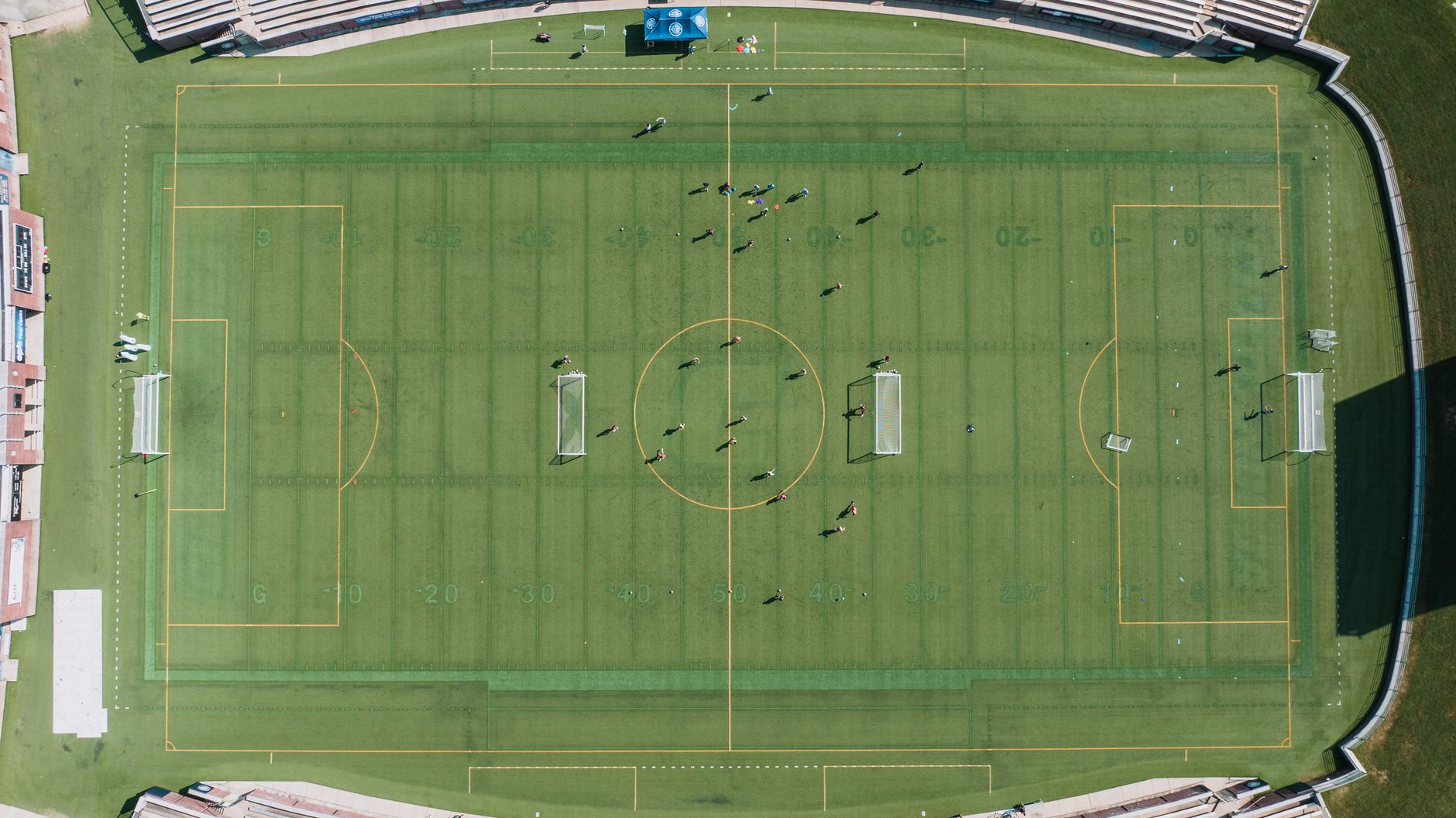
Photo by K on Pexels
Football Insights tracks these transitions for readers following FIFA World Cup 2026 contenders.
Step 5: Verification — how can you confirm a formation?
You can verify a formation by observing repeated player locations across several phases rather than relying on a single freeze-frame. Check the first five minutes, a settled possession sequence, a defensive transition, and a late-match situation; if the same relationships recur, your interpretation is probably sound.
Use this five-stage verification method:
- Identify the goalkeeper and ignore them in the numerical count.
- Locate the deepest consistent line, distinguishing centre-backs from full-backs or wing-backs.
- Count midfield connections, not merely shirts standing near the centre circle.
- Track width providers on both flanks during possession.
- Compare attacking and defensive snapshots after turnovers.
This method corrects a surprisingly common mistake: calling a 4-3-3 a 4-2-3-1 because one interior midfielder temporarily drops beside the pivot. Formation labels should describe recurring structure, not one player’s momentary movement. Likewise, a late substitution can make a 4-2-3-1 resemble 4-4-2 without changing the manager’s basic plan. Record the match minute, scoreline, and possession state before making a strong tactical claim. Score effects matter: a leading side often lowers its block, while a trailing side increases forward occupation. The same players can therefore generate different visual evidence at 0-0 and 1-0.
[Internal Link: advanced football pressing and transition analysis]
Troubleshooting common failures
The most common formation-reading failure is treating the lineup graphic as permanent truth. Another is assuming more attackers always means more attacking threat, despite poor spacing or weak progression. A third is ignoring player quality: a technically secure full-back can invert into midfield, while a less adaptable player may remain wide even in the same nominal system.
When your reading seems wrong, test the following:
- The shape keeps changing: compare possession and non-possession phases.
- The midfield count is unclear: identify who protects the centre-backs and who occupies the half-spaces.
- A 3-5-2 looks like a 5-3-2: check wing-back height during settled possession.
- A 4-4-2 appears overloaded: track whether one striker drops or a winger narrows.
- The tactical plan seems ineffective: examine distances, not only player numbers.
- A substitution changes everything: restart your analysis from the new match state.
One particularly useful edge case concerns the half-space. A winger may begin outside the full-back, then move into the channel between full-back and centre-back. The team sheet still says 4-3-3, but the attack is now creating a five-lane structure with the full-back overlapping outside. If you only count lines, you miss the mechanism creating the chance. If you examine the receiving zones, the reason for the formation becomes visible.
The FIFA Training Centre presents football learning through principles such as creating space, exploiting space, and maintaining balance. Its central lesson is applicable here: formations are tools for organising those principles, not substitutes for them. As one frequently repeated coaching principle puts it, “the ball moves faster than the player.” Whether or not a particular coach uses that exact wording, the operational truth remains useful: spacing and passing speed can defeat a numerically superior block.
Frequently Asked Questions
Q: What is a football formation?
A: A football formation is the planned arrangement of 10 outfield players, written from defense to attack while excluding the goalkeeper. A 4-3-3 means four defenders, three midfielders, and three forwards, while a 4-2-3-1 divides midfield into two deeper players and three advanced players. The formation describes starting responsibilities, not rigid positions. During a match, pressing, possession, substitutions, and the scoreline can transform the same structure.
Q: How do you read football formation numbers?
A: Read the numbers from the team’s goal toward the opponent’s goal, beginning with defenders and ending with attackers. First identify the defensive line, then determine whether midfielders form a flat line, triangle, double pivot, or diamond. Finally, check who supplies width and who connects with the striker. The numbers should total 10 because the goalkeeper is not included.
Q: What is the difference between 4-3-3 and 4-2-3-1?
A: A 4-3-3 uses three midfielders and three forwards, while a 4-2-3-1 uses two deeper midfielders, three advanced attackers, and one striker. The 4-3-3 often offers wider forward pressure and flexible midfield triangles. The 4-2-3-1 usually gives stronger protection in front of the centre-backs and a clearly defined number-10 zone. Actual performance depends on player movement and technical quality.
Q: Is 3-5-2 an attacking or defensive formation?
A: A 3-5-2 can be attacking or defensive depending mainly on the wing-backs’ positions. With wing-backs high, it may create a front five and dominate wide areas; with them deep, it becomes a 5-3-2 focused on box protection. The three centre-backs provide security, but the team can still be vulnerable if the midfield cannot cover wide transitions. Always compare possession and defensive snapshots.
Q: Why does a formation look different during a match?
A: Formations look different because teams change shape during possession, pressing, defensive recovery, transitions, and score effects. A 4-3-3 can become a 2-3-5 in attack or a 4-1-4-1 without the ball. A leading team may reduce risk after scoring, while a trailing team may send additional players forward. Analyse repeated movements over several minutes instead of judging one frame.
Q: How much tactical knowledge is needed to analyse formations?
A: You need only a basic understanding of player lines, width, central protection, and transitions to begin analysing formations accurately. Start by watching the first five minutes and noting the deepest line, midfield connections, and forward occupation. Then compare those observations after the first goal or substitution. Advanced analysis adds pressing triggers, half-spaces, passing networks, and rest-defense structure, but the basic method is free and immediately practical.
Q: What should you do if you cannot identify a team’s formation?
A: Compare four match situations: settled possession, defensive organisation, attacking transition, and defensive transition. If the shape changes in each phase, label it as a hybrid system rather than forcing one number sequence. Track the full-backs, deepest midfielder, and highest central player first, because those roles usually reveal the underlying structure. Record the minute and scoreline, since a 0-0 shape may differ substantially from a late 1-0 shape.
The practical conclusion is modest but powerful: read formations as probabilities of behaviour, not promises of position. Count the lines, inspect the spaces, compare both phases, and then ask which players make the system function. That is how Football Insights readers can analyse FIFA World Cup 2026 matches with more discipline than the average viewer—and, frankly, fewer embarrassing tactical declarations after one camera angle.
Ready to apply the method to the next match?
End of transmission.
Football Insights • Neon Protocol • System Active