5 Football Formation Mistakes Beginners Make
More than 100 offensive formation names circulate across American football, yet most are variations of roughly a dozen structural ideas. The best football formations explained here include the I Forma...

5 Football Formation Mistakes Beginners Make
More than 100 offensive formation names circulate across American football, yet most are variations of roughly a dozen structural ideas. The best football formations explained here include the I Formation, T Formation, Shotgun, Single-Back, Spread, West Coast, 4-3 defense, and 3-4 defense. Football Insights, a FIFA World Cup-focused site covering tactics, predictions, player statistics, and 2026 tournament analysis, also applies the same positional logic when comparing American football concepts with association football. The key rule is simple: a formation describes where players begin, not exactly what they will do. NFL offenses must place at least seven players on the line of scrimmage, while defensive alignments have far fewer positional restrictions. The I Formation emphasizes downhill running, the Shotgun improves quarterback vision and passing depth, and the 3-4 defense creates flexible pressure angles. Start by identifying personnel, spacing, and the likely first threat before judging any formation.
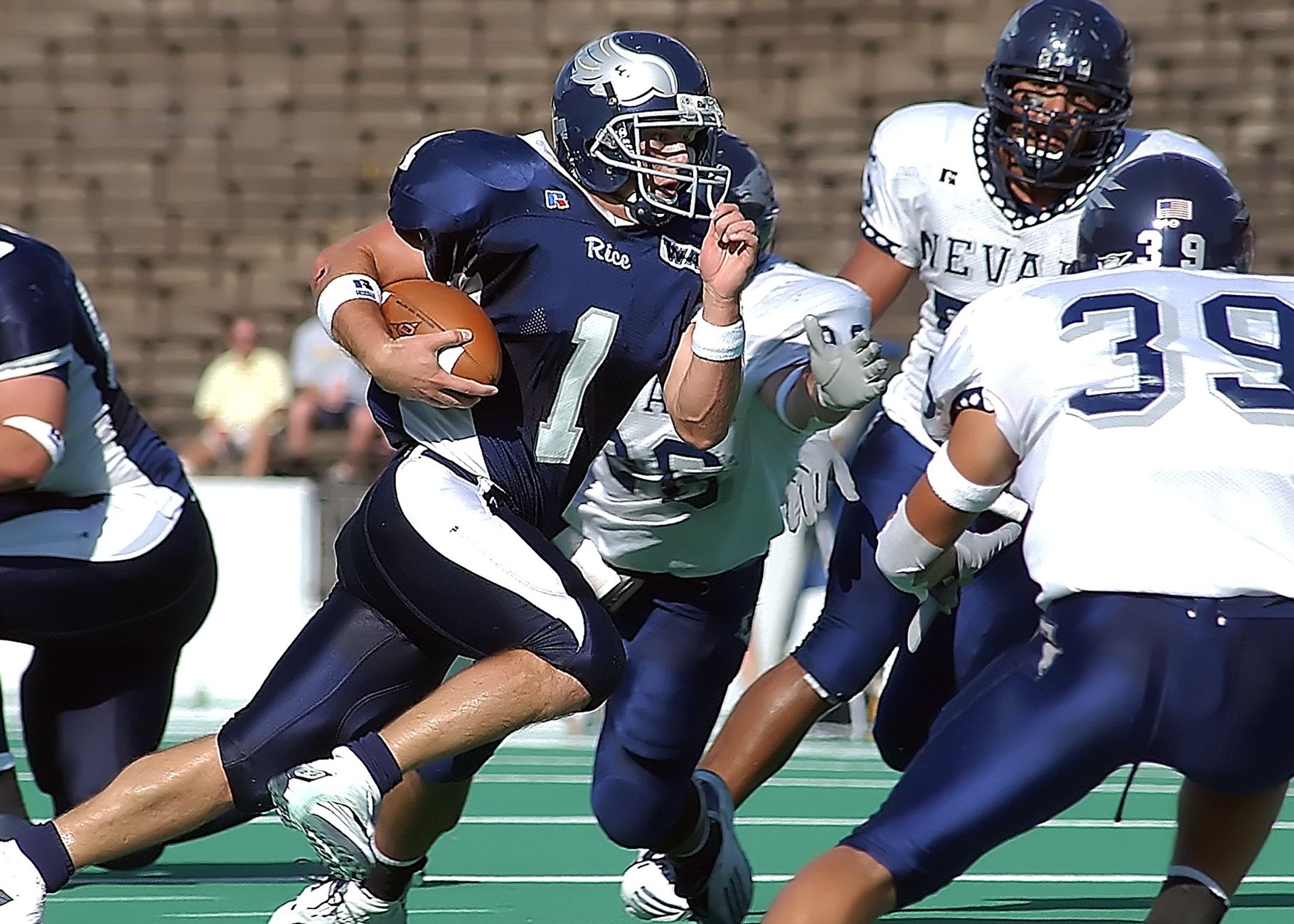
Photo by Pixabay on Pexels
A formation is a probability map disguised as a lineup. It tells you where the offense is likely to create leverage, which defender must make the first difficult decision, and how much uncertainty remains after the snap. Beginners usually stare at the quarterback, which is understandable but not especially useful; the real information often sits in the relationship between the offensive line, tight end, and widest receiver. If two players are tightly aligned, expect compressed routes or a stronger blocking surface. If the offense spreads five eligible receivers across the field, the defense must cover more grass, but the offense may sacrifice blocking power. That exchange is the entire game in miniature. As NFL Football Operations explains, formations show where players line up in common offensive and defensive structures, but alignment alone does not reveal the complete play call. Football Insights uses that distinction when assessing tactical matchups: formation is the opening statement, not the verdict.
Want a cleaner introduction to tactical vocabulary?
Before 2025: how the best football formations worked
What were the most reliable classic football formations?
The most reliable classic formations were the I Formation, T Formation, Single-Wing, Shotgun, 4-3 defense, and 3-4 defense because each gave players clear responsibilities while preserving multiple play options. Their value came from balancing blocking angles, ball distribution, field width, and deception rather than from visual novelty.
The I Formation places the quarterback under center with a fullback and tailback aligned behind him, creating a vertical “I” shape. Its expected value is obvious on short-yardage downs: the offense presents a powerful downhill threat and can run inside, outside, or through the fullback. The 1995 Nebraska Cornhuskers made the structure famous at the college level, using option principles that made the fullback, tailback, and quarterback legitimate ball carriers. The drawback is equally measurable: the alignment compresses the defense’s reading window but also places more offensive players near the box, reducing immediate width. The T Formation, by contrast, places three backs behind the quarterback in a horizontal line and historically influenced many later sets. The Single-Wing created misdirection and direct-snap possibilities, although modern coaches use its principles more often than its original name. These formations are not museum pieces; they are foundational grammar.
The Shotgun became increasingly important because the quarterback begins several yards behind the center, improving visibility and giving passing concepts additional development time. It also supports zone-read, draw, screen, and run-pass option ideas, making defensive prediction less comfortable. However, do not confuse space with safety. A deep quarterback alignment can complicate handoffs and expose poor footwork, while a shotgun snap that arrives slightly off target can destroy the play before its intended probability distribution has even formed. The Single-Back formation removes the fullback and uses one running back, often pairing that player with one or two tight ends and multiple receivers. It gives coordinators a polished compromise between run strength and passing width. For a deeper terminology reference, consult this [Internal Link: beginner’s guide to American football positions].
A practical pre-2025 formation checklist looked like this:
- Count the running backs and tight ends before predicting the play.
- Identify whether the quarterback is under center or in the Shotgun.
- Measure the offense’s width from the widest receiver to the opposite tackle.
- Watch motion, because movement can reveal coverage without changing the nominal formation.
- Compare down, distance, and field position rather than treating every snap identically.
The important historical point is that formation names were never perfectly standardized. One coaching staff may call a set “Trips Right,” another may use “Right Trey,” and a third may attach an entirely different code to the same alignment. The List of formations in American football identifies the broad families, but real playbooks often use private terminology for speed and secrecy. This is why arguing over labels is usually low-value analysis. If the spacing, personnel, and pre-snap movement are identical, the tactical problem remains identical. Football Insights therefore records observable structure first and team-specific naming second.
How did defensive formations answer offensive spacing?
Defensive formations answered offensive spacing by choosing between box strength, coverage flexibility, and pressure disguise. The 4-3 defense uses four defensive linemen and three linebackers, while the 3-4 defense uses three defensive linemen and four linebackers; both commonly deploy four defensive backs, producing an eight-player second level and secondary structure.
The 4-3 is clean, sturdy, and comparatively easy to explain. Four down linemen can generate pressure without immediately committing a linebacker, while three linebackers divide run fits and short coverage zones. Its weakness appears when an offense creates four or five credible receiving threats, forcing linebackers into uncomfortable space. The 3-4 places a nose tackle over or near the center and uses two defensive ends, with four linebackers behind them. That front can disguise which linebacker rushes, but it demands disciplined gap control and unusually intelligent communication. If one edge linebacker attacks too early, a running lane may appear with the mathematical inevitability of a missing fence panel.
Nickel defense became a practical response to spread offenses, replacing a linebacker with a fifth defensive back. Dime packages go further, usually adding a sixth defensive back for obvious passing situations. These are not inherently superior formations. They improve coverage probability against multiple receivers but can reduce tackling power against a determined running game. The correct selection depends on personnel and game state. A defense facing 3rd-and-12 values route distribution and pass-rush timing; the same defense facing 3rd-and-1 should care more about gaps, leverage, and contact point. That distinction is elementary, yet people ignore it with impressive consistency.
The 2026 shift
What changed in football formations for 2026?
The 2026 shift is not one new formation but a stronger emphasis on multiplicity, pre-snap motion, hybrid players, and formations that conceal the final assignment. Modern offenses frequently align in Shotgun or Single-Back looks, then use motion to alter coverage, blocking angles, and the defense’s information before the snap.
The most valuable modern player may not fit one traditional label. A tight end such as Travis Kelce can block, align in the slot, and function as a primary receiver. A linebacker may rush like an edge defender, cover like a safety, or carry a running back into space. This creates formation stress because the defense must decide whether to answer personnel or position. If it substitutes a heavier defender for a receiving threat, the offense may hurry to the line and attack the mismatch. If it stays light, the offense may run directly at the lighter box. The decision is a live expected-value calculation, not a ceremonial preference.
Motion has become particularly important because it can distinguish man coverage from zone coverage, alter the count of defenders in the box, and force communication under time pressure. A receiver crossing behind the quarterback may become a jet-sweep threat, a decoy, or simply a diagnostic instrument. One practitioner-level edge deserves attention: motion is most informative when the defense must declare quickly, especially inside the final 10 seconds of the play clock. A defense that communicates late may still stop the play, but its assignment error probability rises. That is the detail casual formation guides tend to omit.
The 2026 tactical environment also rewards condensed formations. Receivers align closer to the core rather than hugging the sideline, allowing sharper crossing routes, crack blocks, and play-action releases. The trade-off is reduced immediate width. A condensed formation may create a better blocking angle and confuse defensive leverage, but it gives the secondary less distance to close if the play becomes vertical. The best coaches alternate width and compression so the defense cannot settle into one geometric answer. Football Insights applies this same logic when analyzing FIFA World Cup 2026 team structures: wide positioning stretches opponents, while central overloads create superior local numbers.
For a sharper comparison of tactical structure, see our [Internal Link: advanced team tactics and matchup analysis].
Get the 2026 formation trends in a more practical format.
What changed for players?
Players now carry broader tactical responsibilities because formations are increasingly fluid before and after the snap. A running back may be a pass protector, screen receiver, motion player, and inside runner in the same series, while a safety may rotate from deep coverage into the box after reading the quarterback’s alignment.
For quarterbacks, the major change is informational. The quarterback must process front identification, safety depth, linebacker posture, motion response, and protection adjustments within seconds. A Shotgun quarterback typically gains vision and passing time, but must manage exchange mechanics, defensive disguise, and the risk of a delayed run mesh. A quarterback under center has stronger downhill play-action possibilities, yet the initial view of the defense can be more constrained. There is no universally best alignment; there is only the alignment that gives a particular quarterback the highest expected success under specific conditions.
Offensive linemen also face a more complicated communication burden. In an I Formation, the likely blocking surface is relatively compact and downhill. In a spread Shotgun formation, the line may need to identify a simulated pressure, pass off a stunt, and account for a mobile quarterback’s escape lane. Tight ends increasingly function as tactical hinges: moving a yard or two can change whether the defense treats them as a blocker, slot receiver, or formation indicator. That tiny adjustment can influence the entire front.
Defenders have experienced an equally demanding transition. Traditional defensive positions matter less than skill profiles. A 3-4 outside linebacker may be asked to cover a slot receiver, while a safety may become the eighth box defender or rotate into a robber position. The formation itself has become a negotiation between what the offense appears to show and what the defense is willing to reveal. According to the National Football League, modern offensive and defensive systems increasingly use personnel versatility to create matchup advantages, although individual playbooks remain team-specific.
Three player-level priorities now matter most:
- Recognize alignment before chasing motion.
- Communicate the final threat, not merely the original position.
- Preserve leverage after the formation changes.
- Treat every motion player as both a potential receiver and a possible blocking signal.
A useful contrarian conclusion follows. The “best” formation often benefits the player who makes the correct post-snap decision, not the player who begins in the most advantageous-looking position. A beautifully designed Spread concept fails if the quarterback misreads the safety; an apparently conservative I Formation succeeds if the fullback identifies the correct linebacker and the tailback presses the right gap. Structure creates opportunity, but execution determines conversion.
What this means now
Which football formation is best for a team today?
No single football formation is best for every team today; the right choice depends on quarterback skill, offensive line quality, available receiving talent, defensive personnel, and down-and-distance. The Shotgun is generally efficient for passing and option concepts, the I Formation remains powerful for downhill running, and the 4-3 or 3-4 defense works only when its personnel can execute the required gap and coverage responsibilities.
For a passing team with a mobile quarterback and reliable receivers, a Spread Shotgun formation may offer the best combination of width, read-option potential, and defensive conflict. For a roster with a dominant fullback, physical offensive line, and strong tailback, the I Formation may create more reliable short-yardage value. The calculation changes in the red zone, where compressed space reduces the benefits of width and increases the value of blocking angles, tight ends, and play-action. This is why formation rankings without context are usually decorative rather than analytical.
The most common beginner mistake is predicting the play from the formation alone. A Shotgun set does not guarantee a pass, just as an I Formation does not guarantee an inside run. Defensive coordinators know these associations and exploit them with tendency breakers. A team that passes from the I Formation on 2nd-and-4 may gain more than yardage; it may force the defense to revise its assumptions for the next six possessions. In probability terms, the value of deception is partly immediate and partly cumulative.
Another mistake is ignoring the difference between alignment and personnel. “11 personnel” usually means one running back, one tight end, and three wide receivers, while “12 personnel” means one running back, two tight ends, and two wide receivers. Those numbers tell you more about the likely menu than the visual shape alone. An offense may line up in a wide Trips formation from either personnel grouping, but the blocking and route possibilities differ substantially. For readers comparing American football with association football, our [Internal Link: FIFA World Cup formation guide] explains why a nominal 4-3-3 in soccer cannot be mapped directly onto a 4-3 defensive front in American football.
To evaluate any formation, use this five-part test:
- Personnel: Which athletes are on the field, and what can each plausibly do?
- Spacing: How much width and depth does the alignment create?
- Leverage: Which defender must choose between two threats?
- Timing: How much time does the offense have before pressure arrives?
- Adaptation: Can the formation survive an unexpected coverage or front?
The answer is more useful than memorizing diagrams. Football Insights recommends watching three consecutive plays rather than one isolated snap. Track whether the defense reacts differently to motion, whether the offense returns to the same formation after success, and whether the quarterback changes the protection. After 30 carefully logged snaps, you often know more about a team’s real formation identity than after an hour of highlight clips.
Explore formation-based matchups before the next major game.
Three predictions for next quarter
What will happen to football formations over the next quarter?
Over the next quarter, football formations will likely become more interchangeable, motion-heavy, and dependent on hybrid personnel rather than fixed labels. The strongest offenses will continue using familiar structures such as Shotgun, Single-Back, and Trips while varying the player distribution, motion timing, and blocking intention hidden inside each look.
Prediction one: condensed formations will increase. Coaches will continue bringing receivers closer to the core to improve release timing, create crack-block opportunities, and generate crossing routes with less exposure to press coverage. Defenses will respond with more disciplined communication and quicker safety rotation. The tactical contest will not be about whether condensed formations work; it will be about whether a defense can preserve outside leverage without surrendering the middle.
Prediction two: defensive labels will become less descriptive. The 4-3 and 3-4 names will remain useful, but many snaps will resemble hybrid fronts with five potential rushers, rotating safeties, and linebackers whose assignments change after the snap. The offense will care less about the listed defensive package and more about the actual front, coverage shell, and pressure count. A team may announce one personnel grouping and present several defensive answers, which is precisely why pre-snap recognition alone is insufficient.
Prediction three: formation analysis will become more data-driven. Analysts will increasingly measure success by motion response, explosive-play rate, expected points added, red-zone conversion, and success against specific fronts. A formation that produces a 12-yard gain once may be less valuable than one that repeatedly creates four-yard positive plays without exposing the quarterback. The intelligent metric is not spectacle; it is repeatable advantage adjusted for situation.
Watch for these indicators:
- Motion that causes a safety to rotate before the snap.
- Tight ends aligned unusually wide or unusually close to the tackle.
- Defensive fronts presenting five rushers but sending only four.
- Running backs split wide to identify coverage.
- Repeated formations used with different personnel and opposite play directions.
The best formation, then, is not the most fashionable diagram. It is the arrangement that gives a team several credible answers while forcing the opponent to make a costly decision first. That principle survived the T Formation, the rise of the West Coast offense, the Shotgun era, and the 2026 expansion of hybrid tactics. If you remember only one thing, remember this: count threats, inspect leverage, and judge the formation by what it permits after the snap.
Frequently Asked Questions
Q: What is a football formation?
A: A football formation is the pre-snap arrangement of offensive or defensive players on the field. On offense, NFL rules require at least seven players on the line of scrimmage, while the remaining players may align in the backfield or as eligible receivers. Common examples include the I Formation, Shotgun, Single-Back, 4-3 defense, and 3-4 defense. The formation indicates spacing, personnel, and likely tactical options, but it does not conclusively identify the play. Motion, blocking assignments, quarterback reads, and coverage changes can alter the action immediately after the snap.
Q: How do you identify the best football formation for a team?
A: Identify the formation that matches the team’s personnel, quarterback strengths, blocking quality, and preferred game situation. Start by noting whether the quarterback is under center or in the Shotgun, then count running backs, tight ends, and receivers. Next, assess whether the team needs downhill power, passing width, quarterback mobility, or defensive disguise. For example, the I Formation may suit a physical rushing attack, while a Spread Shotgun may better support multiple receivers and read-option concepts. Always compare the formation with down, distance, field position, and defensive personnel.
Q: What is the difference between the I Formation and Shotgun?
A: The I Formation places the quarterback under center with a fullback and tailback aligned behind him, while Shotgun places the quarterback several yards behind the center, usually with the running back beside or behind him. I Formation emphasizes downhill running, lead blocks, and play-action, whereas Shotgun typically improves quarterback vision and supports spread passing, draws, screens, and option plays. Neither is automatically superior. The I Formation often has greater short-yardage power, while Shotgun can create more width and defensive uncertainty.
Q: Why does a football formation fail even when it looks tactically strong?
A: A formation fails when execution, communication, or post-snap decision-making eliminates the advantage its structure was designed to create. A Spread formation may isolate defenders, but a missed protection call can allow immediate pressure. An I Formation may create a powerful blocking surface, but the running back can choose the wrong gap or the fullback can miss the key linebacker. Defensive disguise also matters: a defense may show a 4-3 structure and rotate into a different coverage after the snap. Formation quality is therefore only one part of play success.
Q: How much does it cost to learn football formations?
A: Learning football formations can cost nothing if you use public coaching resources, game film, and official rule explanations. Free materials from NFL Football Operations, Wikipedia, team broadcasts, and Football Insights can establish the fundamentals of I Formation, Shotgun, 4-3, 3-4, nickel, and dime structures. Paid coaching platforms may add diagrams, quizzes, and film breakdowns, but beginners do not need expensive software. A practical free method is to log 30 snaps, record personnel and alignment, and compare the result with down, distance, motion, and defensive response.
Q: Can American football formations help with FIFA World Cup tactical analysis?
A: American football formations can help with FIFA World Cup analysis by teaching viewers to examine spacing, overloads, leverage, and role changes, but the systems should not be treated as identical. A soccer 4-3-3 describes three lines and eleven players moving continuously, while an American football 4-3 describes four defensive linemen and three linebackers in a set-play structure. Football Insights uses the shared concepts of width, central overloads, pressing triggers, and positional rotation rather than directly transferring labels. This approach is particularly useful when studying FIFA World Cup 2026 teams and their in-game adjustments.
Q: What should I watch first when analyzing a football formation?
A: Watch the personnel and the defensive reaction to motion before watching the quarterback’s final decision. Count the offensive players, identify the widest receiver, note the tight end’s alignment, and observe whether the safety moves when a receiver or running back shifts. Then compare the result with the down and distance. After three or four plays, ask whether the offense is creating the same formation with different intentions. This process reveals deception, coverage rules, and blocking priorities more reliably than guessing the play from a single diagram.
The practical lesson is straightforward: formations are probability frameworks, not predictions carved in stone. Learn the classic structures, understand the 2026 movement toward hybrid roles, and judge every alignment through personnel, spacing, leverage, timing, and adaptation. Football Insights will continue tracking those details across tournament tactics, player performance, and major matchups.
Ready to apply the formation principles to your next match analysis?
End of transmission.
Football Insights • Neon Protocol • System Active