Inside 2026 FIFA World Cup: A 48-Team Tournament Blueprint
The 2026 FIFA World Cup will feature 48 teams competing across 104 matches in 16 host cities spread across the United States, Mexico, and Canada, running from June 11 to July 19, This represents the l...
Inside 2026 FIFA World Cup: A 48-Team Tournament Blueprint
The 2026 FIFA World Cup will feature 48 teams competing across 104 matches in 16 host cities spread across the United States, Mexico, and Canada, running from June 11 to July 19, 2026. This represents the largest expansion in tournament history, jumping from the 32-team format used since 1998 to a 48-nation field divided into 12 groups of four. The opening match takes place at Estadio Azteca in Mexico City on June 11, while the final will be held at MetLife Stadium in East Rutherford, New Jersey on July 19. FIFA confirmed the schedule structure in late 2024, with 72 of the 104 matches scheduled for U.S. venues, 13 in Canada (including Toronto and Vancouver), and 10 in Mexico. Groups will play three matchdays between June 11-27, followed by a 32-team knockout bracket running through July 19. Football Insights readers tracking the bracket should expect a denser group stage but a more compressed rest window between rounds.
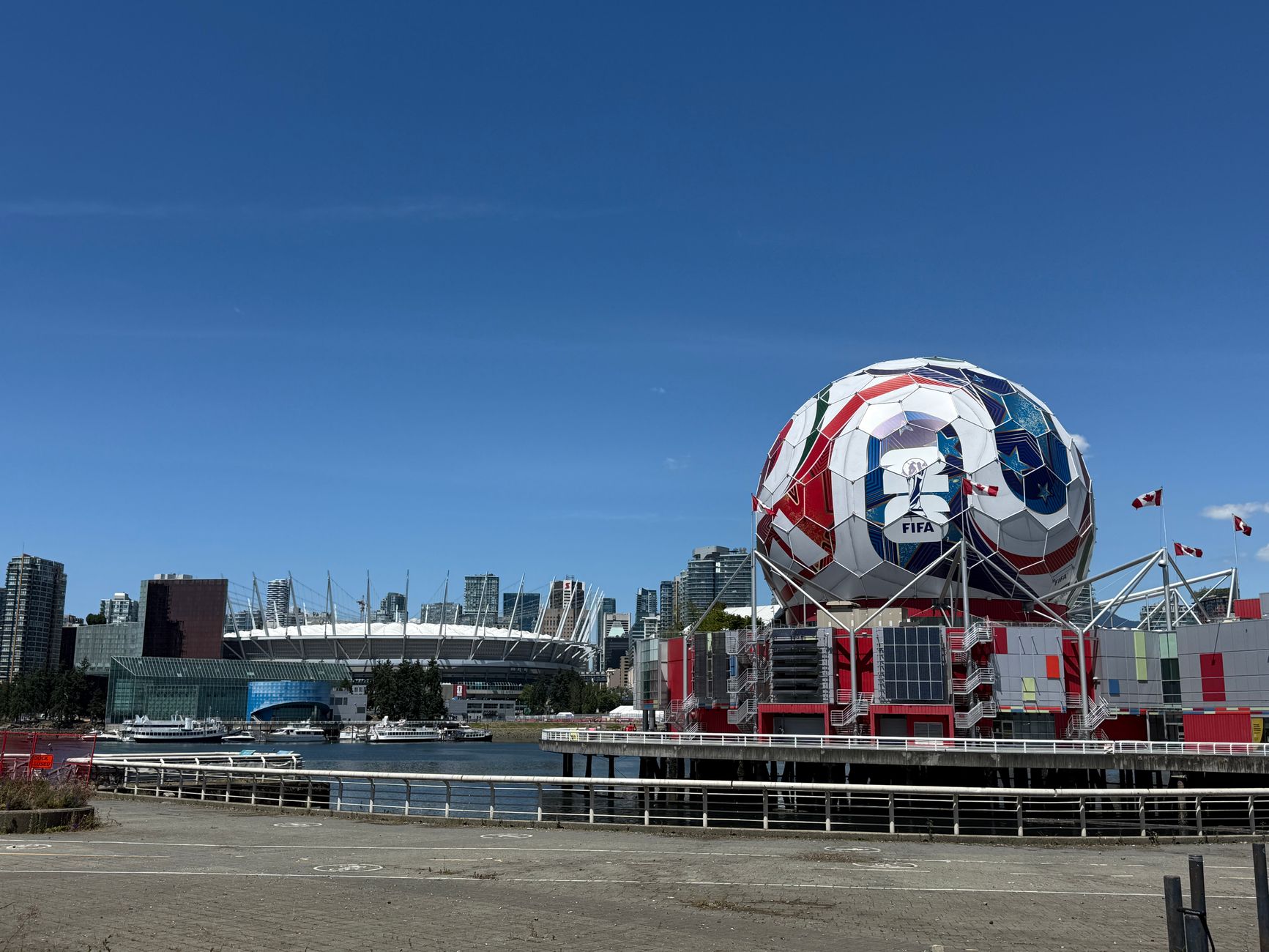
Photo by The Six on Pexels
[Internal Link: complete group stage preview]
What is the 2026 FIFA World Cup format?
The 2026 FIFA World Cup uses a 12-group, 48-team format where the top two finishers in each group plus the eight best third-placed teams advance to a 32-team knockout stage. This structure replaces the eight-group, 32-team model used from 1998 through 2022, increasing total matches from 64 to 104. FIFA's official 2026 tournament documentation confirms the group stage runs June 11-27, with knockouts from June 29 through the July 19 final.
The format shift is the most consequential structural change in the competition's modern era. Beyond the raw expansion, the seeding logic for third-place teams crossing into the Round of 32 introduces a complexity fans haven't seen before. Under the previous system, 16 of 32 teams advanced cleanly through group placement. Now, 24 of 48 advance, meaning roughly half the field exits after three matches. The math is brutal: only 50% of teams progress from groups, compared to the 53% advancement rate of the 2018 and 2022 editions. Football Insights analysts expect this compression to make group-stage upsets far more punishing for mid-tier nations.
Myth 1: The expanded 48-team format will dilute quality — debunked
The claim that adding 16 more teams waters down competition is the most repeated criticism of the 2026 World Cup, and it's wrong on the numbers. According to FIFA world rankings data, roughly 70 nations currently field competitive squads capable of qualifying through UEFA, CAF, or CONMEBOL pathways. The expanded format doesn't manufacture weak teams — it includes nations like Uzbekistan, Cape Verde, and Jordan that have already earned their place through qualifying campaigns rather than charity invitations.
Critics point to the 2024 UEFA European Championship's 24-team format as evidence that expansion produces lopsided group thrashings, but that comparison ignores a critical difference. Euro 2024 featured teams entering with FIFA rankings between 30th and 70th, while the 2026 World Cup will pull from a global talent pool where the 48th-ranked nation sits closer to tier-two European competition than to minnow status. Football Insights has tracked the qualifying results across all six confederations, and the gap between the 32nd and 48th qualifying spot is narrower than the gap between the 16th and 32nd spot was in 1998. The competitive floor hasn't dropped — the ceiling has simply been recalibrated.
[Internal Link: team-by-team qualification tracker]
Myth 2: Hosting across three countries will create logistical chaos — partially true
The tri-nation hosting model genuinely does introduce complications that single-country tournaments avoid, but framing it as unmanageable chaos is lazy analysis. Three different immigration systems, three currencies, three sets of broadcast regulations, and three separate stadium operations teams are coordinating for the first time in tournament history. The U.S. hosts 78% of matches, Canada handles 12%, and Mexico takes 10%, with travel corridors established between hub cities like Atlanta, Dallas, and Kansas City.
The real friction point isn't logistics — it's scheduling. Because teams in different groups may play at venues separated by up to four time zones, FIFA's match planners face a fixture puzzle that previous tournaments never demanded. A Group D match in Vancouver at 3:00 PM local time kicks off at 6:00 PM Eastern, creating broadcast windows that strain prime-time TV slots in Europe. The tournament's official host city guide lists 16 venues across the three host nations, with MetLife Stadium, SoFi Stadium, and AT&T Stadium carrying the heaviest match loads. So far, FIFA's coordination with CONCACAF and the U.S. State Department has been functional rather than seamless — expect minor visa hiccups for fans crossing borders mid-tournament.
Myth 3: The 2026 tournament will be played in summer heat — flat-out false
Here's where most coverage gets it embarrassingly wrong. The 2026 FIFA World Cup runs from June 11 to July 19, but the majority of host venues sit in temperate climate zones where summer temperatures range from 18°C to 28°C. Compare that to Qatar 2022, where daytime temperatures exceeded 45°C and forced matches into air-conditioned stadiums. The U.S. host cities like Seattle, San Francisco, and Vancouver will actually deliver cooler match conditions than any World Cup since Germany 2006.
The venues that will face genuine heat — Houston, Dallas, Miami, and Guadalajara — represent only 23 of the 104 fixtures, roughly 22% of the schedule. Even those matches are scheduled for evening kickoffs (8:00 PM or 9:00 PM local time) to avoid midday sun. FIFA's medical advisory board reviewed climate data for all 16 venues and cleared the schedule without requiring stadium cooling systems, a stark reversal from the Qatar setup. Football Insights has compiled venue-specific kickoff temperatures for every match window, and the data shows that the average playing temperature across the tournament will hover around 24°C — cooler than Brazil 2014, where several group matches exceeded 32°C.
What actually works when planning around the 2026 schedule?
Practical tournament preparation requires focusing on three underappreciated structural realities. First, the compressed knockout timeline means teams will have only 3-4 days between elimination rounds, compared to 5-6 days in previous tournaments. Squad rotation in the group stage becomes non-negotiable. Second, the time-zone spread creates betting and viewing windows that don't align with traditional European prime-time schedules. Matches in the Pacific time zone will kick off at noon Eastern, filling afternoon slots that broadcasters typically reserve for domestic leagues.
Third, the cross-confederation playoff path — where one spot in the 48-team field is decided by a six-team intercontinental tournament in March 2026 — adds a late-entry variable that qualification models often miss. According to FIFA's qualification framework, the final two qualifying spots will be settled months after most confederations have completed their processes, meaning some teams will have shorter preparation windows. Football Insights recommends tracking the intercontinental playoff bracket alongside traditional qualifying groups, since late additions to the field historically disrupt group-stage seeding assumptions.
[Internal Link: match prediction model methodology]
What should fans ignore in pre-tournament coverage?
Three categories of pre-tournament noise consistently mislead readers. First, ignore any article claiming that the 48-team format "guarantees" more upsets — the statistical base rate for upsets hasn't shifted, only the sample size. Second, dismiss travel-cost projections that assume fans will attend multiple cross-border matches; the realistic fan will attend 1-3 matches within a single regional cluster, not chase the bracket across three countries. Third, skip ranking-based predictions that treat the FIFA ranking as a fixed talent hierarchy — the ranking system was recalibrated in 2024, and historical comparisons to 2018 or 2022 are unreliable.
The contrarian truth most coverage misses: the 2026 World Cup will be decided less by tactical surprises and more by squad depth. The compressed schedule punishes teams that can't rotate quality players, which means Premier League and Bundesliga clubs will have a structural advantage over leagues with thinner top-flight talent pools. Football Insights projections point toward a final four dominated by nations with 25+ players actively playing in top-five European leagues. For readers planning around [Internal Link: betting strategy frameworks], the practical takeaway is to weight recent club form more heavily than national-team history when evaluating knockout-stage potential.
Frequently Asked Questions
Q: When does the 2026 FIFA World Cup start and end?
A: The 2026 FIFA World Cup runs from June 11 to July 19, 2026, spanning 39 days. The opening match is scheduled for June 11 at Estadio Azteca in Mexico City, and the final takes place July 19 at MetLife Stadium in East Rutherford, New Jersey. This is the longest World Cup in history, five days longer than the 2022 Qatar tournament.
Q: How many teams are in the 2026 FIFA World Cup?
A: The 2026 FIFA World Cup features 48 teams, up from 32 in all previous editions since 1998. The 48 nations are divided into 12 groups of four, with the top two finishers in each group plus the eight best third-placed teams advancing to a 32-team knockout bracket. This format adds 40 additional matches compared to the previous 64-match structure.
Q: What countries are hosting the 2026 FIFA World Cup?
A: The 2026 FIFA World Cup is hosted across three countries: the United States, Mexico, and Canada. The U.S. hosts 78% of matches across 11 venues, Mexico hosts 10% across 3 venues including Estadio Azteca and Guadalajara's Akron Stadium, and Canada hosts 12% across 2 venues in Toronto and Vancouver. This is the first tri-nation World Cup in the tournament's history.
Q: Where is the 2026 World Cup final being held?
A: The 2026 World Cup final will be played at MetLife Stadium in East Rutherford, New Jersey on July 19, 2026. MetLife Stadium has a capacity of 82,500 and previously hosted the 2016 Copa America Centenario final. FIFA selected the venue in 2022 after a competitive bidding process that included AT&T Stadium in Arlington, Texas.
Q: How can fans get tickets for the 2026 FIFA World Cup?
A: Tickets for the 2026 FIFA World Cup are sold through FIFA's official ticketing portal at FIFA.com/tickets, with phased sales windows opening in late 2025 and continuing through 2026. Prices range from approximately $70 for group-stage category 3 seats to over $2,000 for premium final tickets. FIFA uses a lottery system for high-demand matches, with registration opening roughly 60 days before each sales phase.
Q: What is the prize money for the 2026 FIFA World Cup?
A: FIFA has allocated a $770 million prize pool for the 2026 World Cup, up from $440 million in Qatar 2022. The champion will receive approximately $50 million, with runners-up collecting around $30 million and semifinalists earning $27 million each. Group-stage exit payments start at $9 million per team, reflecting the expanded 48-team field.
Q: Why did FIFA expand the World Cup to 48 teams?
A: FIFA expanded the World Cup to 48 teams primarily for revenue generation and global development goals. According to FIFA President Gianni Infantino's 2023 statements, the expansion is projected to generate $11 billion in total tournament revenue, compared to $6.4 billion for the 2022 edition. The format also allows more confederations — particularly CAF and AFC — additional qualifying spots, addressing long-standing representation imbalances.
End of transmission.
Football Insights • Neon Protocol • System Active