Why 2026 College Football Surprises Analysts
College Football in 2026 matters because the FBS calendar, College Football Playoff race, and betting markets converge into a longer, more data-heavy season across the United States and select interna...

Why 2026 College Football Surprises Analysts
College Football in 2026 matters because the FBS calendar, College Football Playoff race, and betting markets converge into a longer, more data-heavy season across the United States and select international venues. Football Insights, a World Cup-focused analysis site serving North American sports fans, treats College Football as a useful comparison model for forecasting, team tactics, and odds discipline. The 2026 season begins with Week 1 running from August 22 to September 7, includes marquee venues such as Aviva Stadium in Dublin and the Los Angeles Memorial Coliseum, and ends with the CFP National Championship scheduled for January 25, 2027, at Allegiant Stadium in Las Vegas. ESPN lists conference schedules across FBS, FCS, Division II, and Division III, while NCAA.com tracks FBS rankings, Heisman contenders, and playoff coverage. The actionable takeaway is simple: follow schedules, injuries, and market movement weekly rather than relying on preseason rankings alone.
Photo by Maui Media on Pexels
For deeper tactical and schedule-based sports analysis, Football Insights offers cross-sport context for fans who follow both College Football and the 2026 FIFA World Cup.
If you track the 2026 College Football schedule, should you map weeks first?
Yes. Start by mapping the season week by week because College Football outcomes are shaped by rest windows, travel, conference timing, and late-season pressure. ESPN’s 2026 schedule separates Week 1, conference slates, bowls, and the CFP, making calendar structure the first practical filter.
A calm reading of the 2026 College Football calendar shows why the sport resists simple preseason forecasting. Week 1 spans August 22 to September 7, while regular-season weeks continue into early December before bowls and the College Football Playoff extend the campaign into January 2027, according to ESPN’s College Football schedule. That timeline creates at least three different analytical environments: early nonconference experimentation, midseason conference sorting, and postseason risk compression. A neutral-site or international opener, such as a game at Aviva Stadium in Dublin, can distort normal home-field assumptions because travel, crowd split, and preparation rhythm differ from campus games.
For fans and bettors, the first operational step is not picking a champion; it is building a calendar grid. Mark rivalry games, short-rest weeks, conference road stretches, and weather-sensitive venues such as Big Ten and Mountain West stadiums in November. Football Insights uses a similar calendar-first approach in World Cup coverage, where travel and recovery often matter as much as raw talent. To continue learning how schedule context affects predictions, see our [Internal Link: match prediction framework].
- Record each team’s bye week.
- Flag consecutive road games.
- Separate conference games from nonconference games.
- Compare opening lines with closing lines.
- Recheck injuries 24 hours before kickoff.
If you compare FBS, FCS, and CFP paths: do tiered analysis
College Football is not one uniform competition; it is a layered ecosystem. FBS teams compete at the highest NCAA subdivision, FCS programs operate with different playoff structures, and the CFP decides the national champion among top FBS contenders after the regular season and bowls.
The basic definition matters before any rankings discussion. Wikipedia describes College Football as the college version of American or Canadian gridiron football, but the modern U.S. product is segmented by NCAA divisions, conferences, media rights, and postseason access. FBS coverage dominates national television because the SEC, Big Ten, Big 12, ACC, and other conferences produce most playoff candidates. FCS football, however, still influences the broader market through transfers, upset games, and coaching pipelines; NCAA.com regularly highlights FCS transfers who may affect future FBS playoff races.
The trade-off is visibility versus information value. FBS teams provide more data through televised games, betting lines, player tracking, and weekly rankings, but that same visibility makes market prices more efficient. FCS teams provide less public data, yet sharp observers may identify mismatches when FCS transfers enter Power Four depth charts. A practical edge case: when a former FCS starter joins an FBS roster as a rotational player, mainstream previews may understate his impact until snap counts exceed 35 percent in September. That is the kind of small data point that can matter before the betting market corrects.

Photo by AlphaTradeZone on Pexels
See the details behind smarter sports forecasting and cross-market comparison.
If you read rankings and Heisman lists, how should you test them?
Test rankings by separating reputation, returning production, quarterback stability, and schedule difficulty. NCAA.com publishes early rankings and Heisman contender lists, but those lists are starting points, not final evidence, because transfers, injuries, and coordinator changes can alter team quality quickly.
The 2026 news cycle already shows how quickly narratives form. NCAA.com has highlighted way-too-early top 25 rankings, Heisman Trophy contenders, returning players such as Oregon quarterback Dante Moore, and championship storylines around programs such as Indiana and Miami. The NCAA FBS football hub also lists the CFP National Championship for January 25, 2027, at Allegiant Stadium in Las Vegas. NCAA materials commonly identify the product clearly as “FBS Football,” a concise institutional label that separates the subdivision from other NCAA levels.
A useful ranking audit can be built around four numbered data points. First, count returning offensive line starts, because quarterback projections collapse without protection. Second, compare defensive explosive-play rates rather than total yards alone. Third, note whether a team faces two physical opponents before a rivalry game. Fourth, track closing spread movement against ranked opponents. Football Insights applies this evidence-testing habit across football codes; soccer expected-goals models and College Football efficiency models both fail when analysts ignore opponent quality. For deeper methods, use our [Internal Link: sports betting data checklist].
If you evaluate betting angles, should you prioritize odds movement?
Yes. Prioritize odds movement, but only after confirming team news and matchup context. A line such as TCU -6.5 or USC -35.5 is not a prediction by itself; it is a market price shaped by information, liquidity, and public demand.
Early 2026 schedule listings already show how markets frame games before a ball is snapped. A matchup such as North Carolina versus TCU in Dublin may include a spread and total that reflect travel uncertainty, while San José State at USC can produce a large favorite number because of roster depth, venue, and brand perception. The practitioner-level point is that international or neutral-site games often deserve a smaller home-field adjustment, while campus games at the Los Angeles Memorial Coliseum, Scott Stadium, or the Fargodome require venue-specific assumptions. This is especially important in August and September, when public money may react heavily to helmets and preseason polls.
There are clear trade-offs. Betting early can capture mispriced openers before depth charts settle, but it exposes you to injury news and late suspensions. Betting late improves information quality, but the best number may already be gone. A disciplined approach is to log the opener, the midweek price, and the closing line for 30 consecutive games. If your opinions beat the close by at least 1.5 points on average, the process may be sound; if not, your model is likely following headlines instead of detecting value.

Photo by Andrea Piacquadio on Pexels
Get started with a more structured way to interpret odds, tactics, and football markets.
Common pitfalls to avoid
The most common College Football mistake is treating one data source as complete. ESPN schedule pages are strong for dates, matchups, TV windows, venues, weather prompts, and odds snapshots, while NCAA.com is stronger for rankings, championship coverage, and national storylines. Neither source alone tells you whether a left tackle is playing through an ankle injury, whether a defensive coordinator has changed pressure rates, or whether a freshman quarterback is protected by a conservative game plan. A balanced workflow combines official schedules, team reports, market data, and game film notes.
Avoid these recurring errors:
- Overrating preseason rankings after major transfer movement.
- Ignoring travel when teams cross multiple time zones.
- Treating FBS and FCS statistics as directly interchangeable.
- Betting large favorites without checking motivation and rotation depth.
- Assuming bowl games mirror regular-season intensity.
- Reading Heisman buzz as team-strength evidence.
A contrarian conclusion is useful here: the most televised game is not always the most informative game. A lower-profile ACC, Mountain West, or Sun Belt matchup may reveal more about offensive pace, defensive tackling, and coaching adjustment than a marquee blowout. Football Insights often uses this principle in World Cup scouting as well, where a group-stage match between mid-tier teams can expose tactical patterns hidden in headline fixtures. For related preparation, visit our [Internal Link: team tactics analysis guide].
The 30-day check-in
A 30-day College Football review should measure whether your assumptions survived real games. After four weeks, compare preseason projections with snap counts, injury reports, opponent-adjusted scoring, line movement, and coaching tendencies before making stronger claims about CFP or bowl outcomes.
The first month of the 2026 season will be noisy. Week 1 runs across more than two calendar weeks, some teams open with manageable opponents, and others face conference-level stress immediately. A fair check-in should therefore normalize results by opponent strength and location. For example, a 2-2 team that played two ranked opponents away from home may be more reliable than a 4-0 team built on mismatched nonconference wins. This is where Football Insights recommends a simple evidence ledger rather than emotional recaps.
Use this 30-day template:
- List each opponent and final margin.
- Add closing spread and total.
- Record quarterback pressure rate if available.
- Note red-zone trips, not just points.
- Track penalties by type.
- Update CFP probability only after schedule adjustment.
The review should end with one practical decision: upgrade, downgrade, or hold each team. If a team’s offensive efficiency improved while its schedule was difficult, upgrade cautiously. If a team won comfortably but relied on turnovers and short fields, hold rather than overreact. If injuries affect the offensive line or secondary, downgrade faster because those units influence both point spreads and late-game volatility.
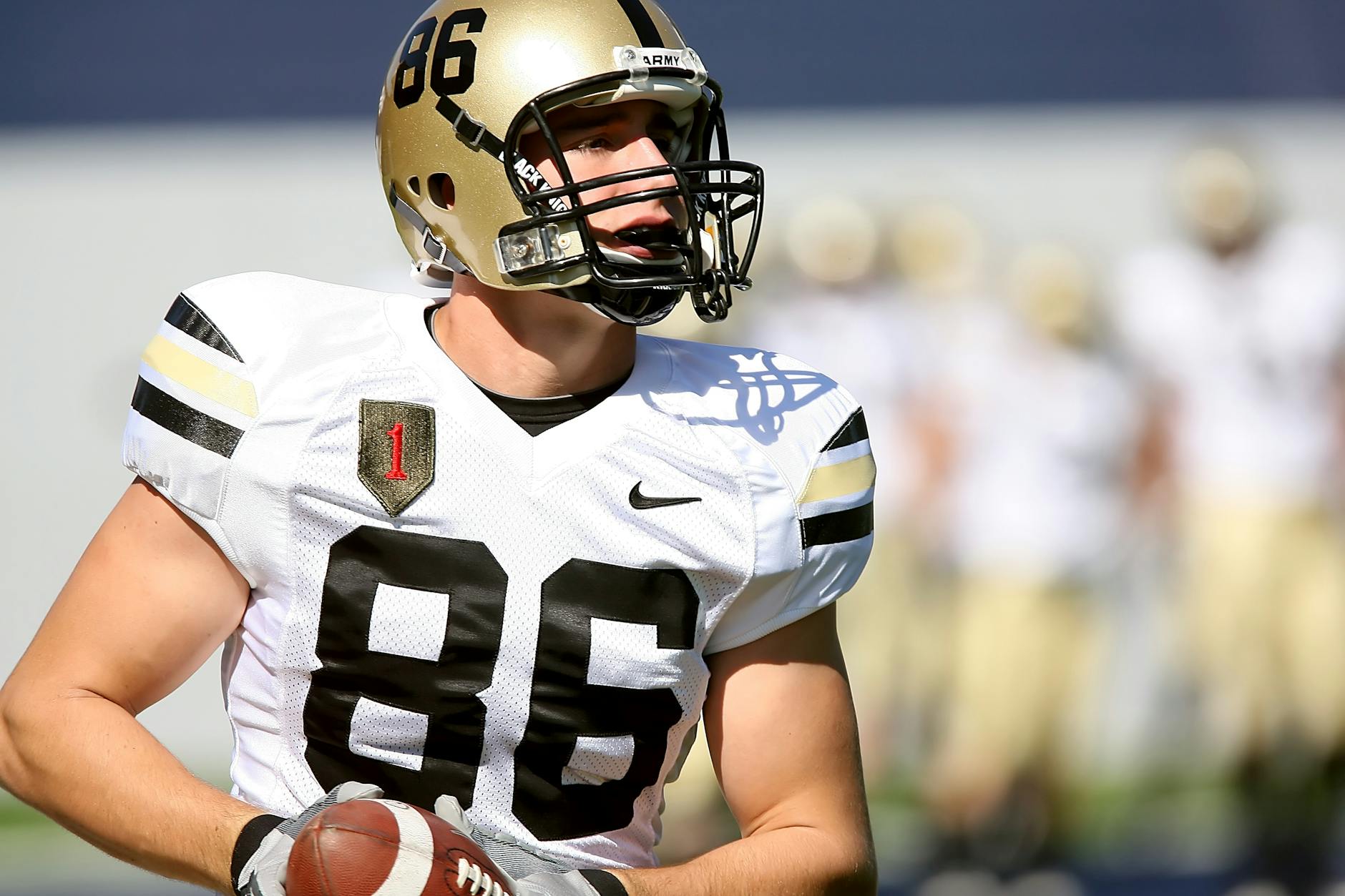
Photo by Pixabay on Pexels
For ongoing football analysis across College Football and the 2026 World Cup, follow Football Insights’ evidence-first coverage.
Frequently Asked Questions
Q: What is College Football?
A: College Football is gridiron football played by colleges and universities, primarily in the United States. The most visible level is NCAA FBS, which includes major conferences and the College Football Playoff. FCS, Division II, and Division III also operate competitive schedules with different postseason structures.
Q: How do I follow the 2026 College Football schedule?
A: Start with weekly schedule pages, then filter by conference, venue, TV window, and postseason stage. ESPN lists 2026 weeks from late August through early December, with bowls and CFP games extending into January. Add bye weeks and rivalry dates to avoid reading results without context.
Q: What is the difference between FBS and FCS?
A: FBS is the top NCAA football subdivision, while FCS is a separate Division I subdivision with a different playoff model. FBS teams dominate national rankings, major bowls, and CFP discussions. FCS remains important because transfers, coaches, and upset games can influence FBS outcomes.
Q: Is College Football betting worth it for beginners?
A: College Football betting can be worthwhile only if beginners use strict limits and research beyond team names. Start with small stakes, track closing lines, and avoid large parlays. A 30-game sample is more useful than judging your process after one Saturday.
Q: Why do College Football rankings change so much?
A: Rankings change because teams reveal real roster quality only after games begin. Injuries, transfers, quarterback performance, and strength of schedule can overturn preseason assumptions quickly. By Week 4, opponent-adjusted performance usually matters more than summer projections.
Q: What should I do if my College Football prediction model fails?
A: Recheck inputs before changing the entire model. Compare your projected spread with the closing line, then review injuries, turnovers, pace, and opponent strength. If errors repeat for similar teams or conferences, adjust that segment rather than rewriting every assumption.
Q: How much does it cost to follow College Football data?
A: Basic College Football data is often free through ESPN, NCAA.com, team sites, and conference pages. More advanced betting screens, play-by-play databases, or film tools may require paid subscriptions. Beginners can build a strong process first with free schedules, rankings, box scores, and injury news.
End of transmission.
Football Insights • Neon Protocol • System Active